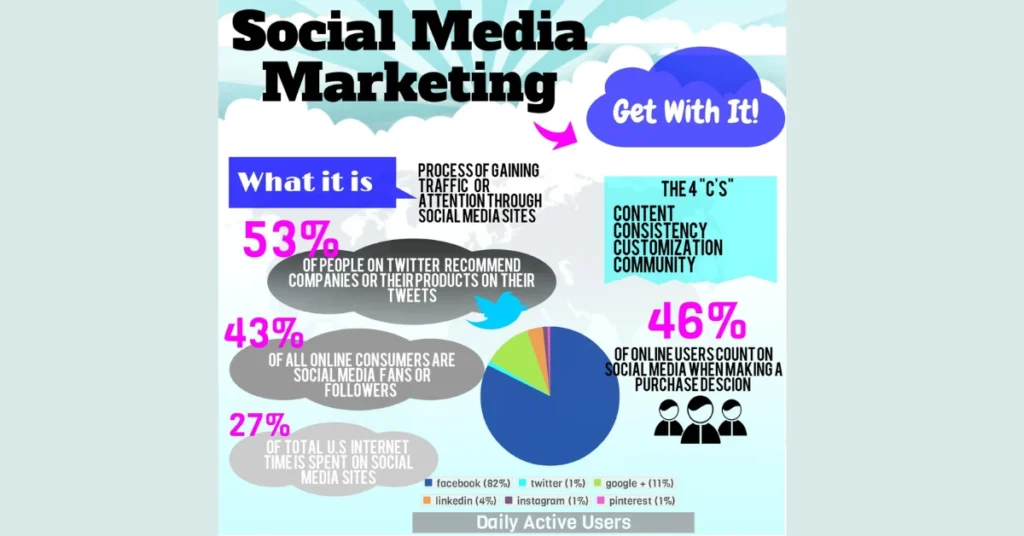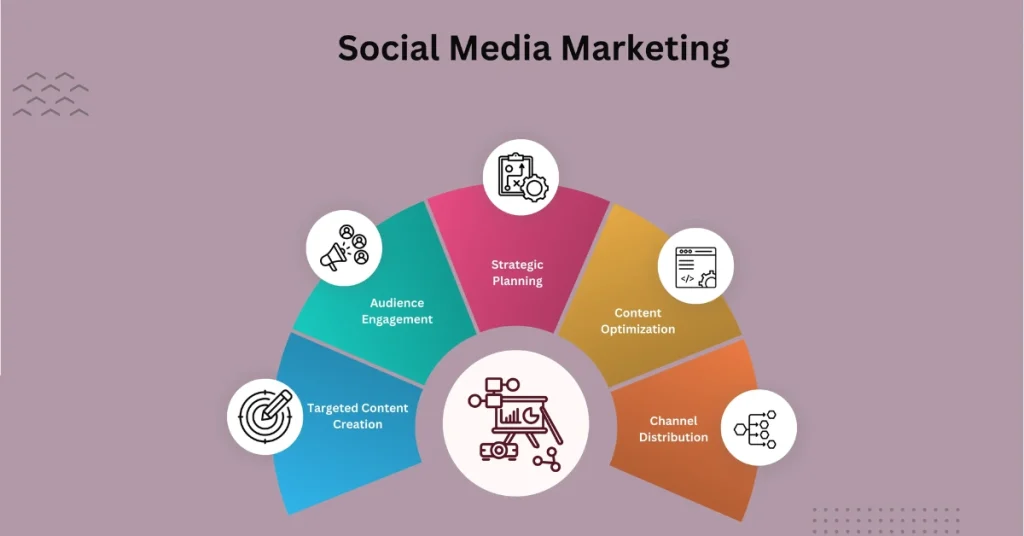
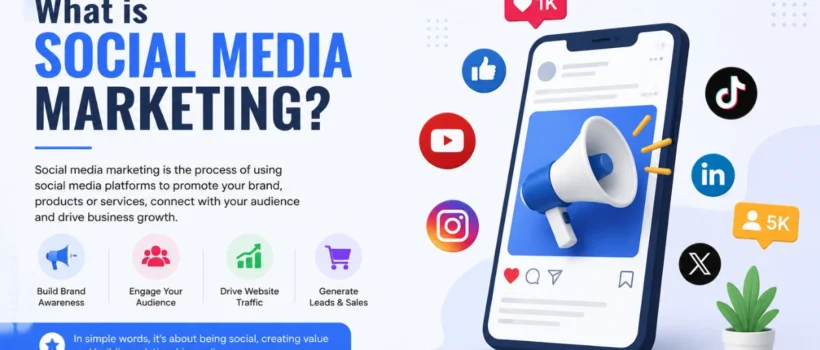
Social media marketing is the use of social media platforms to promote products, services, or brands. It encompasses a wide range of activities, including
Creating and sharing content tailored to specific platforms Engaging with followers through comments, messages, and interactions Running paid advertising campaigns to reach targeted audiences Building communities around your brand Collaborating with influencers to expand your reach Analyzing metrics to optimize performance At its core, social media marketing is about meeting your audience where they already spend their time online—and providing value that keeps them coming back.
Table of Contents
Why Social Media Matters?
1. Massive Audience Reach
Social media platforms boast billions of active users. Here’s a quick breakdown:
Facebook 2.96 billion
Instagram 2 billion
TikTok 1.5 billion
LinkedIn 930 million
Pinterest 480 million
This massive reach means your potential customers are already on social media. The question isn’t whether to be there—it’s how to stand out.
2. Cost-Effective Marketing
Unlike traditional advertising (TV, radio, print), social media marketing offers options for every budget. Organic content is free, and paid campaigns can start as low as $5 per day, making it accessible for businesses of all sizes.
3. Improved Brand Awareness
Consistent social media presence increases brand recognition. When people see your content repeatedly, they begin to trust your brand—and trust leads to conversions.
4. Direct Customer Engagement
Social media allows you to have real-time conversations with your audience. This direct line of communication builds relationships, gathers feedback, and humanizes your brand.
5. Higher Conversion Rates
Studies show that social media marketing can increase conversion rates by up to 127% compared to traditional marketing methods. The combination of targeted reach, engaging content, and strategic calls-to-action drives results.
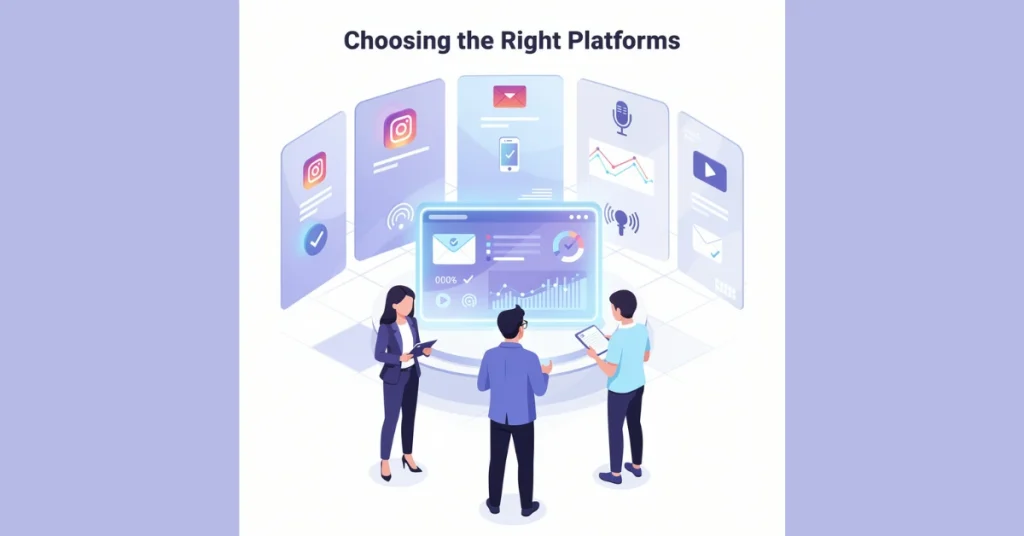
Choosing the Right Platforms
 Not all social media platforms are created equal. Your ideal platform depends on your target audience, industry, and business goals. Here’s a breakdown to help you choose.
Facebook
Best for: B2C businesses, local businesses, community building Audience: Adults 25-54 Content types: Videos, photos, live streams, articles, polls Lorem ipsum dolor sit amet, consectetur adipiscing elit. Ut elit tellus, luctus nec ullamcorper mattis, pulvinar dapibus leo.
 Best for: Gen Z audiences, viral content, brand awareness Audience: Primarily 16-24 Content types: Short-form videos, trends, challenges, duets
LinkedIn
Best for: B2B companies, professional services, recruiting Audience: Professionals 25-54 Content types: Articles, infographics, company updates, job postings
Twitter/X
Best for: News, real-time updates, customer service, tech brands Audience: Adults 18-49 Content types: Text updates, threads, images, polls, spaces
YouTube
Best for: Long-form content, tutorials, brand storytelling Audience: All ages (2.5 billion users) Content types: Videos, Shorts, live streams, community posts
Pinterest
Best for: E-commerce, DIY, home decor, fashion, food Audience: Primarily women 25-54 Content types: Pins, videos, infographics
Building Your Social Media Strategy
 A winning social media strategy doesn’t happen by accident. It requires careful planning, clear goals, and consistent execution. Follow steps to create your roadmap
Step:1 Define Your Goals
Start by asking: What do I want to achieve?
Increase brand awareness
Drive website traffic
Generate leads and sales
Build a community
Improve customer engagement
Establish thought leadership
Pro tip: Use the SMART framework—make your goals Specific, Measurable, Achievable, Relevant, and Time-bound.
Step 2: Know Your Audience
Understanding your audience is critical. Create detailed buyer personas by considering:
Demographics: Age, gender, location, income, education Psychographics: Interests, values, attitudes, lifestyle Online behavior: Platforms they use, content they engage with, purchase habits Pain points: Problems your product or service solves
Step 3: Analyze Your Competition
Study what your competitors are doing on social media:
Which platforms are they active on?
What type of content performs best?
How often do they post?
How do they engage with their audience?
This research helps you identify opportunities and gaps in the mar ket.
Step 4: Conduct a Social Media Audit
If you already have social media profiles, audit them:
Which posts performed well and why?
Which platforms drive the most traffic?
Are your profiles fully optimized (bio, links, branding)?
How does your engagement rate compare to industry benchmarks?
Step 5: Plan Your Content
Create a content calendar to stay organized. Your calendar should include:
Post dates and times
Content type (video, image, text)
Platform for each post
Captions and hashtags
Links and CTAs
Step 6: Set Your Budget
Determine how much you’re willing to invest in:
Content creation (photos, videos, graphics)
Paid advertising
Social media tools and software
Influencer partnerships
Content Creation Best Practices
 Great content is the heart of social media marketing. Here’s how to create content that captures attention and drives engagement:
80% of your content should inform, educate, or entertain
20% of your content should directly promote your products or services
 This balance keeps your audience engaged without feeling like they’re constantly being sold to.
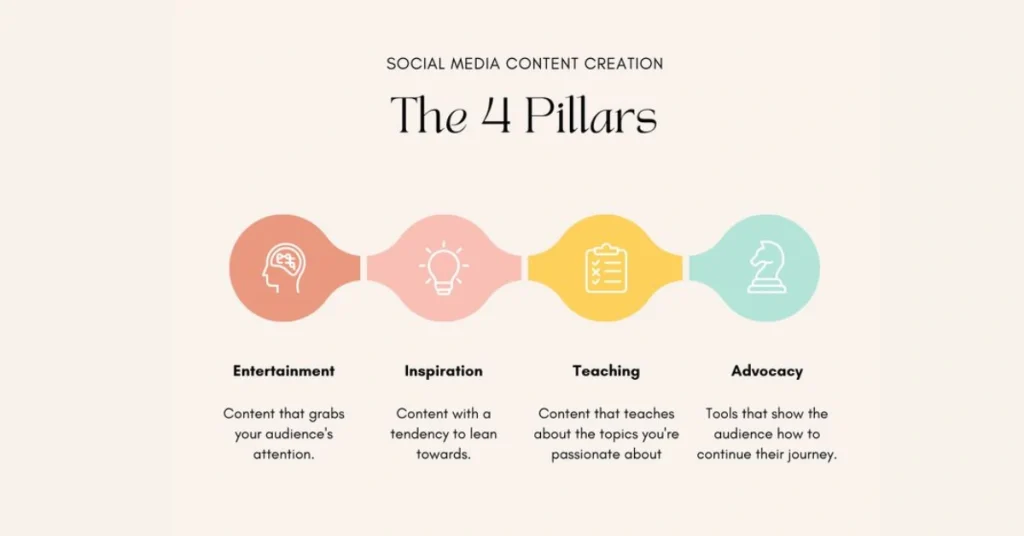
Content PILLARS
Establish 3-5 content pillars that align with your brand and audience interests. For example, a fitness brand might use:
Workout tips and tutorials
Nutrition advice
Client success stories
Product showcases
Motivational content
Visual Quality Matters
High-quality visuals are non-negotiable. Tips for standing out:
Use consistent brand colors and fonts
Invest in good lighting for photos and videos
Edit content to enhance (but not distort) your brand image
Use tools like Canva or Adobe Spark for graphics
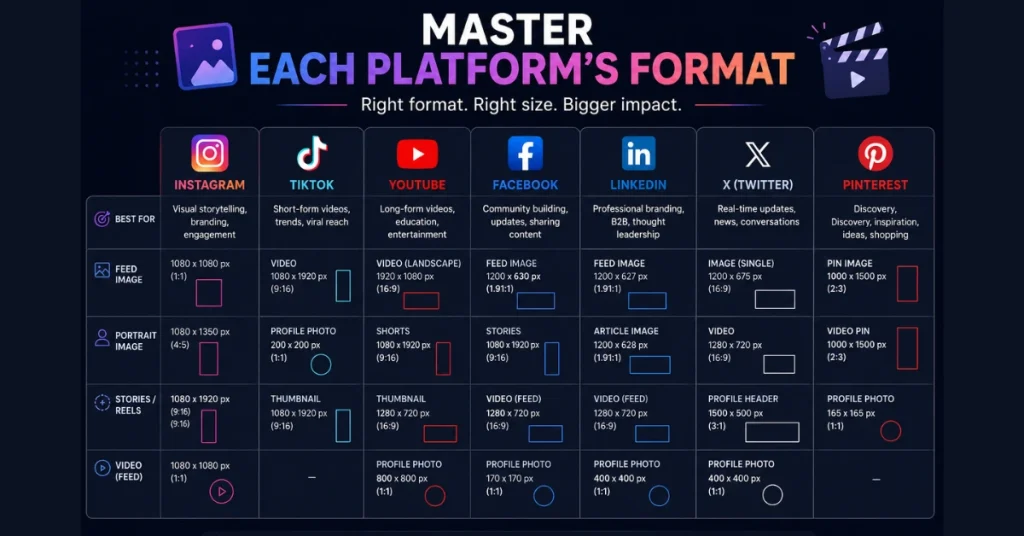
Master Each Platform's Format
Each platform has unique requirements:
Platform
Instagram Feed
Instagram stories
Facebook
Tiktok
Linkedln
Twitter/X
Optimal Post Size
1080 x 1080 px
1080 x 1920 px
1200 x 630 px
1080 x 1920 px
1200 x 627 px
1200 x 675 px
Video Length
Up to 60 sec (Feed) / 15 sec (Reels)
Up to 15 sec per clip
Up to 240 min
Up to 10 min
Up to 10 min
Up to 2 min 20 sec
Aspect Ratio
1:1 or 4:5
9:16
1.91:1
9:16
16:9
Write Compelling Caption
Your caption is your chance to connect. Best practices:
Hook readers in the first line
Use storytelling to build emotional connections
Include a clear call-to-action (CTA)
Add relevant hashtags (5-15 for Instagram)
Ask questions to encourage comments
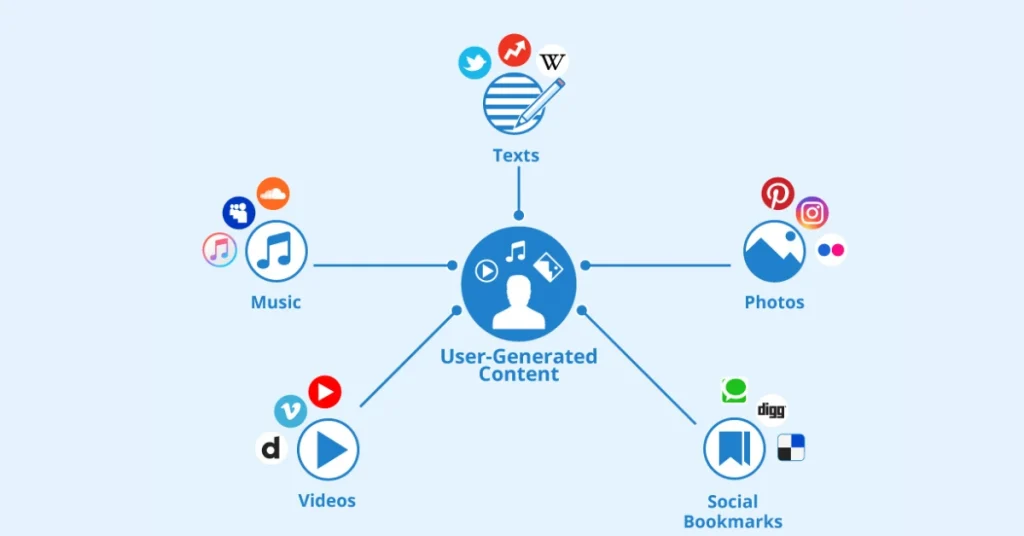
Leverage User-Generated Content (UGC)
Encourage your followers to create content featuring your brand. UGC:
Builds social proof
Increases authenticity
Reduces your content creation burden
Strengthens community engagement
To encourage UGC, run contests, use branded hashtags, and feature customer content on your profile.
The Power of Paid Advertising
While organic reach is valuable, paid social media advertising amplifies your message and targets specific audiences with precision.
Benefits of Paid Social
Targeted reach: Laser-focus on demographics, interests, behaviors Scalable budgets: Start small and increase as you see results Measurable ROI: Track clicks, conversions, and cost per acquisition Retargeting capabilities: Re-engage website visitors and cart abandoners
Platform-Specific Ad Options
Facebook & Instagram Ads:
Photo ads
video ads
Carousel ads
Collection ads
Stories ads
Reels ads
Messenger ads
TikTok ads
In-Feed ads
Branded hashtag challenges
Branded effects
TopView ads
LinkedIn Ads:
Sponsored content
Message ads
Dynamic ads
Text ads
Twitter/X Ads:
Promoted tweets
Promoted accounts
Promoted trends
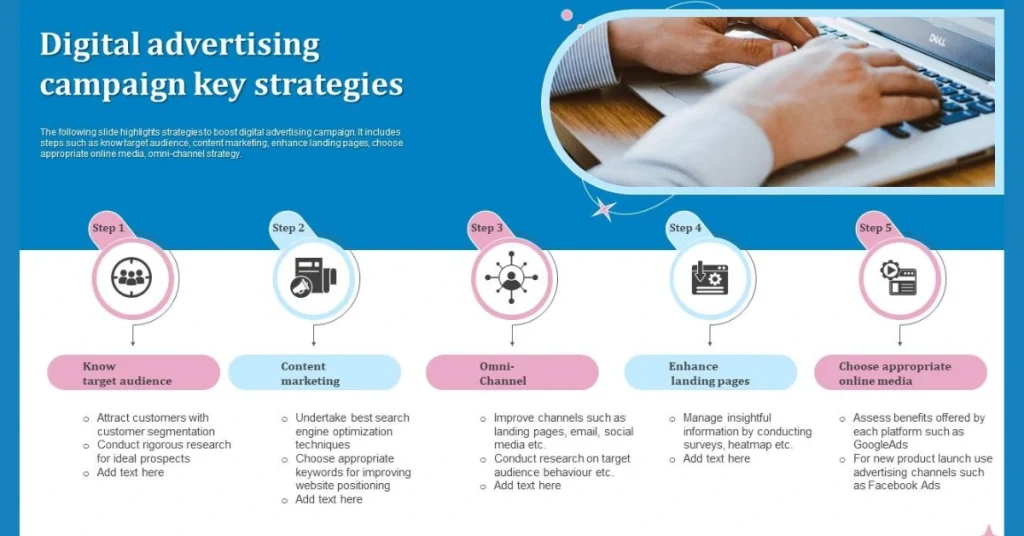
Setting Up Your First Ad Campaign
Choose your objective: Awareness, Consideration, or Conversion Define your audience: Location, age, gender, interests, behaviors Set your budget: Daily or lifetime spend Select placements: Automatic or manual Create compelling creative: Eye-catching visuals + persuasive copy Add tracking: Facebook Pixel, Google Analytics, UTM parameters Launch and monitor: Adjust based on performance data
Ad Spend Benchmarks
Metric
Average CPC
Average CPM
Average CPR
Average ROAS
Industry Average
$0.50 - $2.00
$5.00 - $15.00
0.5% - 1.5%
2:1 to 4:1
Measuring Success with Analytics
Key Performance Indicators (KPIs)
Reach & Awareness:
Impressions: Number of times your content was displayed Reach: Number of unique users who saw your content Follower growth rate: How fast your audience is expanding
Engagement:
Likes/Reactions: Quick expressions of approval
Comments: Deeper level of engagement
Shares/Retweets: Content amplification
Saves/Bookmarks: High-value content signals
Click-through rate (CTR): Percentage clicking your links
Google Analytics:Â Track referral traffic from social media
Social media management tools:Â Hootsuite, Sprout Social, Buffer, Later
Attribution tools:Â Track the customer journey across touchpoints
Creating Monthly Reports
Review your performance monthly by asking:
Which posts performed best and why?
Which platforms drove the most results?
Is our audience growing?
Are engagement rates improving?
What's our return on ad spend (ROAS)?
What should we do differently next month?
Common Mistakes to Avoid
Even seasoned marketers make mistakes. Here’s what to avoid:
1. Not Having a Strategy
Posting randomly without a plan leads to inconsistent results. Always start with a clear strategy.
2. Ignoring Negative Comments
Deleting or ignoring negative feedback damages trust. Respond professionally and address concerns publicly.
3. Buying Followers
Fake followers inflate numbers but provide no value. Focus on building an engaged, authentic audience.
4. Over-Promoting
Bombarding followers with constant sales pitches drives them away. Focus on providing value first.
5. Not Engaging Back
Social media is a two-way street. Respond to comments, DMs, and mentions to build relationships.
6. Inconsistent Branding
Use consistent visuals, tone of voice, and messaging across all platforms to build brand recognition.
7. Ignoring Analytics
Lorem ipsum dolor sit amet, consectetur adipiscing elit. Ut elit tellus, luctus nec ullamcorper mattis, pulvinar dapibus leo.
8. Chasing Every Trend
Not every trend is right for your brand. Evaluate trends critically before jumping in.
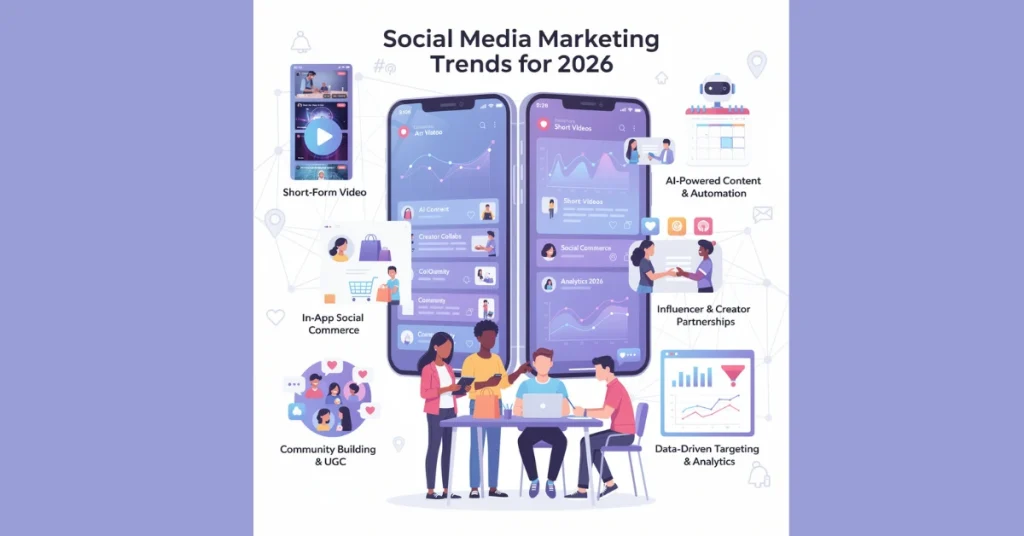
Social Media Marketing Trends for 2026
Stay ahead of the curve with these emerging trends:
1. Short-Form Video Dominance
TikTok, Instagram Reels, and YouTube Shorts continue to dominate. Short-form video is engaging, shareable, and highly convertable.
2. AI-Powered Content Creation
AI tools like ChatGPT, Midjourney, and Canva AI are revolutionizing content creation, making it faster and more efficient.
3. Social Commerce Growth
More users are buying directly on social platforms. Instagram Shopping, TikTok Shop, and Facebook Marketplace are becoming major sales channels.
4. Authenticity Over Perfection
Polished, corporate content is losing appeal. Authentic, relatable content from real employees and real customers resonates more.
5. Community-First Approach
Brands are shifting from broadcasting to building engaged communities. Private groups, exclusive content, and member benefits are on the rise.
6. Influencer Marketing Evolution
Micro and nano influencers (10K-100K followers) are delivering higher engagement rates and better ROI than macro influencers.
7. Personalization at Scale
AI enables personalized content recommendations and targeted advertising based on individual user preferences.
8. Social Listening Importance
Brands are using social listening tools to monitor brand mentions, track sentiment, and gather customer insights.
FAQs
How often should I post on social media?
Optimal posting frequency varies by platform:
Facebook: 1-2 posts per day
Instagram: 1-3 posts per day + stories
TikTok: 1-4 videos per day
LinkedIn: 1-5 posts per week
Twitter/X: 3-5 tweets per day
Pinterest: 5-15 pins per day
How long does it take to see results from social media marketing?
Most businesses see initial results within 3-6 months of consistent effort. Significant ROI typically takes 6-12 months.
Should I be on every social media platform?
No. Focus on platforms where your target audience spends time. It’s better to excel on 2-3 platforms than to spread yourself thin across all of them.
How do I calculate social media ROI?
ROI = (Revenue – Cost) / Cost Ă— 100
Track revenue from social referrals, lead conversions, and direct sales attributed to social channels.
What's the best time to post on social media?
Generally, optimal posting times are:
Weekdays: 9 AM - 3 PM
Peak engagement: Tuesday-Thursday, 10 AM - 2 PM
However, analyze your own audience insights to determine your specific best times.
How do I handle social media crises?
Respond quickly and calmly
Acknowledge the issue publicly
Take the conversation offline if needed
Apologize sincerely if warranted
Implement changes to prevent recurrence
Monitor for ongoing sentiment
Conclusion
Social media marketing is a powerful tool that can transform your business—when done right. By understanding your audience, choosing the right platforms, creating compelling content, leveraging paid advertising, and consistently measuring your performance, you can build a social media presence that drives real results.
Remember: Social media success doesn’t happen overnight. It requires patience, consistency, and a willingness to adapt. Start implementing these strategies today, track your results, and refine your approach based on what works for your unique audience.
The social media landscape will continue to evolve. Stay curious, stay agile, and keep your audience at the center of everything you do.
Ready to take your social media marketing to the next level? Start with one platform, master it, and expand from there. Your social media journey begins with a single post—and every great strategy starts with taking that first step.
Have questions or need personalized advice? Drop a comment below or reach out to our team for a free social media audit.
Related Articles:
10 Social Media Mistakes Killing Your Engagement
How to Create a Content Calendar in 5 Easy Steps
The Complete Guide to Instagram Marketing for Small Business
Facebook Ads vs. Instagram Ads: Which is Right for You?
7 Tools Every Social Media Manager Needs
Feel free to customize this blog post to match your brand voice, add specific statistics relevant to your industry, and include your own case studies or examples. Would you like me to expand on any particular section or add additional content?
India's First #1 AI Based Premium & Affordable Digital Marketing Institute
#1 Worldwide Online & Offline Digital Marketing Learning & Skills Development Institute