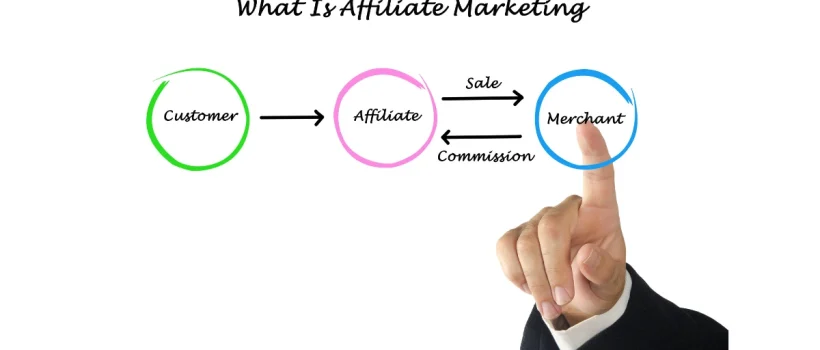
Affiliate marketing is a marketing arrangement where someone with an audience (the affiliate) promotes a business’s products or services and earns a commission when their promotion leads to an outcome the business cares about (like a purchase). In other words: you send a business customers, and the business shares revenue (or pays a bounty) for those results.
A useful way to remember it is: recommendation + tracking + commission. The “tracking” part matters because the merchant needs a reliable way to know which affiliate drove the sale/lead so they can pay the right person.
Table of Contents
Affiliate Marketing: A Comprehensive Guide for 2026
In the fast-evolving world of digital marketing, “Affiliate Marketing” is often mentioned alongside terms like “passive income” and “side hustle.” But for a professional digital marketer, it is much more than that—it is a multi-billion dollar performance-based industry that is reshaping how brands reach consumers.
Whether you are a student looking to start your own venture or a marketing professional aiming to expand your skill set, understanding the mechanics of affiliate marketing is essential.
At its core, affiliate marketing is a performance-based marketing strategy where a business rewards one or more affiliates for each visitor or customer brought by the affiliate’s own marketing efforts.
Think of it as a digital version of a referral program. An affiliate (you) promotes a product or service to their audience,when someone makes a purchase or takes a specific action through your unique link, you earn a commission.
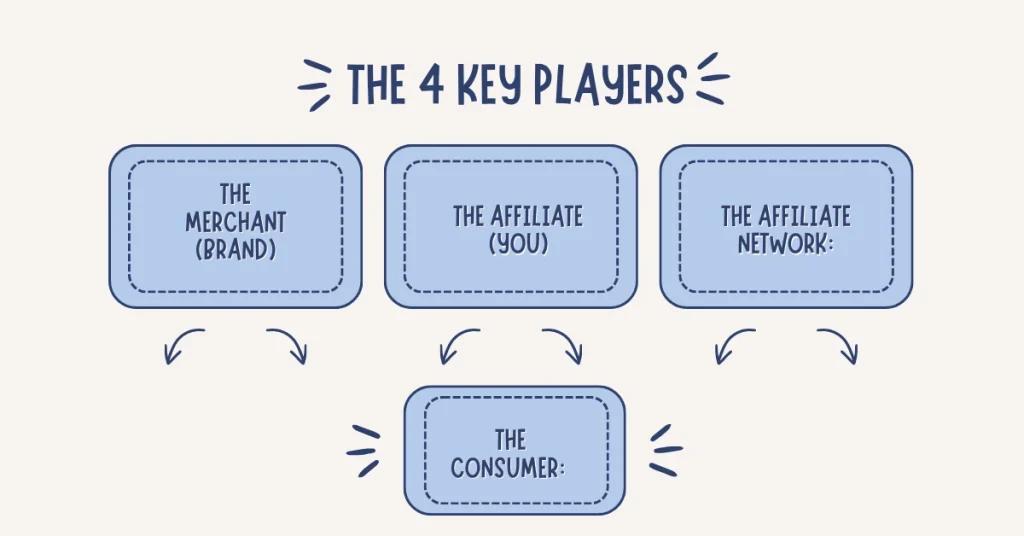
The 4 Key Players
To understand how it works, you need to know the four main actors involved:
List IteThe Merchant (Brand): The creator or seller of the product (e.g., Amazon, Nike, or a SaaS company).m #1
The Affiliate (You): The person or entity that promotes the product to an audience.
The Affiliate Network: A platform that acts as a middleman, hosting various programs and handling tracking and payments (e.g., ShareASale, CJ Affiliate, or Impact).
The Consumer: The person who ultimately clicks the link and makes the purchase.
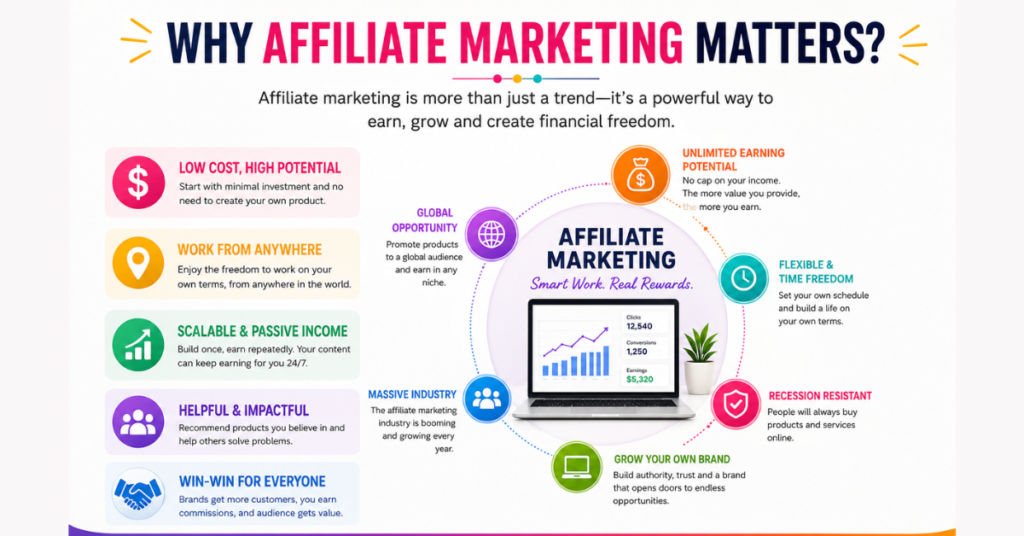
Why Affiliate Marketing is a Must-Learn Skill in 2026
The affiliate marketing landscape has transformed.39 In 2026, the global industry is projected to be worth over $24 billion. Here is why it’s a cornerstone of modern digital marketing
AI-Driven Optimization: Today’s marketers use AI not just for writing content, but for predictive analytics—identifying which products will trend months before they hit the mainstream.
The Rise of the “Micro-Influencer”: Brands are moving away from celebrity endorsements toward “nano” and “micro” influencers who have smaller but highly engaged, trust-based communities.
Low Risk, High ROI: For brands, it’s cost-effective because they only pay for results (sales/leads).
For affiliates, it’s a low-barrier way to start a business without managing inventory or shipping
Common Payout Models: How Do You Get Paid?
Affiliate programs don't all work the same way.
Pay-Per-Sale (PPS): You earn a percentage of the sale price.
This is the most common model (e.g., Amazon Associates).
Pay-Per-Lead (PPL): You get paid when a user completes an action, like signing up for a newsletter, downloading an app, or filling out a contact form.
Recurring Commissions: Common in software (SaaS), you get paid every month the user stays subscribed.
Cost-Per-Click (CPC): While rarer, some programs pay based on the volume of traffic you drive to the merchant’s site.
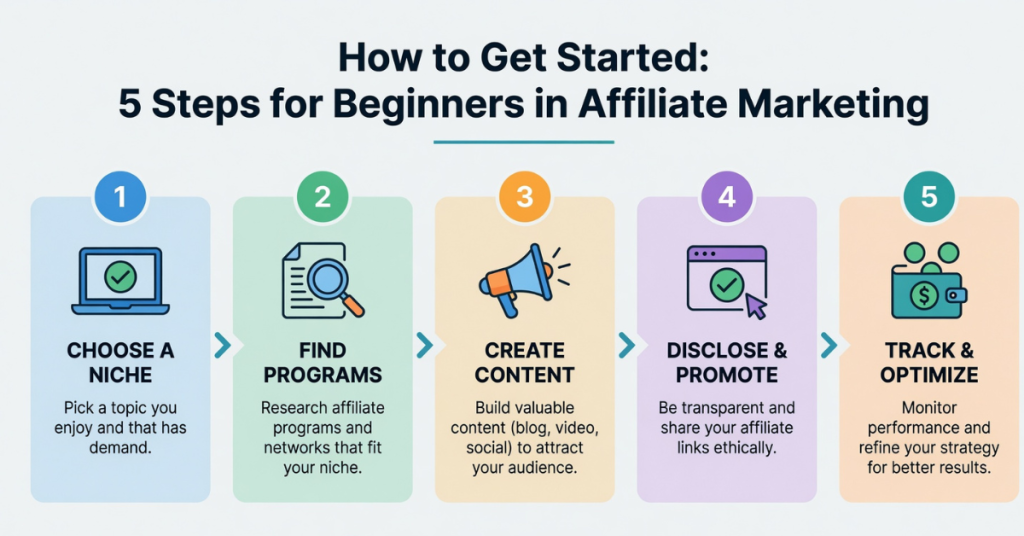
How to Get Started: 5 Steps for Beginners
If you’re ready to dive in, follow this proven roadmap:
1. Choose Your Niche
Don’t try to sell everything. Focus on a specific “problem space.” Instead of “Fitness,” try “Home gym setups for small apartments.” Authority is built through specialization.
2. Choose Your Platform
While social media (TikTok/Instagram) is great for quick reach, a blog or a YouTube channel remains the best long-term asset. Owned media (your website) allows you to build SEO authority that lasts for years.
3. Join Affiliate Programs
Start with reputable networks or look for “Affiliate Program” links at the bottom of your favorite brands’ websites. Look for products you actually use and trust.
4. Create "Helpful" Content (E-E-A-T)
In 2026, Google rewards Experience, Expertise, Authoritativeness, and Trustworthiness. Don’t just list product features; provide real reviews, tutorials, and comparisons. Show yourself using the product.
5. Drive Traffic and Optimize
Use a mix of SEO, email marketing, and social media to drive traffic to your links. Use data analytics to see which links are converting and double down on what works.
Final Thoughts
Affiliate marketing is no longer just about “spamming links.” 9 It is about trust and value. In an era where consumers are skeptical of traditional ads, they turn to creators they trust for recommendations. 4
Mastering affiliate marketing teaches you the most valuable skills in digital marketing: SEO, content strategy, data analysis, and consumer psychology
Want to master the technical side of Affiliate Marketing? Join our [Professional Digital Marketing Course] and learn how to build high-converting funnels, master AI-driven SEO, and launch your own profitable affiliate business.
Suggested Meta Data for the Blog:
Title Tag: What is Affiliate Marketing? A Beginner’s Guide for 2026
Meta Description: Learn what affiliate marketing is, how it works, and the latest 2026 trends. Start your career in performance marketing with our comprehensive guide for beginners.
Keywords: affiliate marketing for beginners, digital marketing skills, how affiliate marketing works, 2026 marketing trends, affiliate networks.
India's First #1 AI Based Premium & Affordable Digital Marketing Institute
#1 Worldwide Online & Offline Digital Marketing Learning & Skills Development Institute