
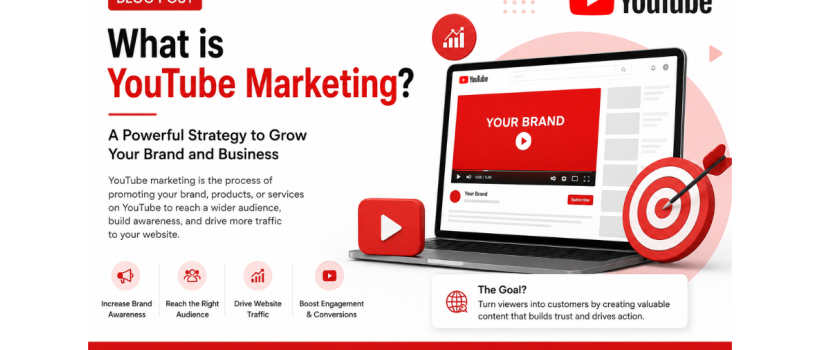

What is YouTube Marketing?
YouTube marketing is the process of promoting a brand, product, or service through video content on YouTube. It involves:
- Creating and optimizing YouTube channels
- Producing engaging video content (tutorials, product demos, vlogs, testimonials, etc.)
- Running YouTube ads (skippable ads, non-skippable ads, bumper ads)
- Optimizing videos for search (SEO)
- Engaging with the audience (comments, community posts, live streams)
Unlike traditional advertising, YouTube marketing allows businesses to build trust, educate customers, and drive organic traffic through valuable content.
Table of Contents
Why YouTube Marketing Matters?
YouTube isn’t just a video-sharing platform—it’s a powerful marketing tool with massive reach and engagement. Here’s why businesses should invest in YouTube marketing:
1. Massive Audience Reach
- 500+ hours of video uploaded every minute.
- 2.7 billion monthly active users (more than Facebook & Instagram combined).
- Global reach—YouTube is available in 80+ languages across 100+ countries.
2. High Engagement & Retention
- Users spend an average of 40+ minutes per session.
- Videos have a 50% higher chance of appearing on Google’s first page.
- Higher conversion rates—64% of viewers are more likely to buy after watching a product video.
3. SEO & Organic Traffic Benefits
- YouTube is owned by Google, so optimized videos rank well in search results.
- Long-form content performs better—YouTube favors videos that keep viewers engaged for longer.
- Backlinks from YouTube videos can improve website SEO.
4. Cost-Effective Advertising
- YouTube Ads (TrueView, Discovery Ads, Bumper Ads) allow precise targeting.
- Lower cost per view (CPV) compared to Facebook & Instagram ads.
- Performance-based pricing—you only pay when users engage with your ad.
5. Builds Trust & Authority
- Educational content (how-to videos, tutorials) positions your brand as an expert.
- Customer testimonials & case studies increase credibility.
- Behind-the-scenes & brand storytelling humanizes your business.
6. Monetization Opportunities
- Sponsorships & brand deals can generate additional revenue.
- YouTube Partner Program (YPP) allows creators to earn from ads.
- Affiliate marketing through video descriptions.
Key YouTube Marketing Strategies

To succeed on YouTube, you need a well-planned strategy. Here are the most effective approaches:
1. Define Your Goals
Before creating content, ask:
- What do I want to achieve? (Brand awareness, lead generation, sales, education)
- What type of content will resonate with them? (Educational, entertaining, promotional)
- Who is my target audience? (Demographics, interests, pain points)
2. Optimize Your YouTube Channel
Your YouTube channel is your brand’s home—make it professional and engaging.
- Channel Name & Branding – Keep it simple, memorable, and related to your niche.
- Channel Trailer – A short, engaging intro video to hook new visitors.
- Channel Banner & Logo – High-quality visuals that represent your brand
- About Section – Clearly describe your channel’s purpose, keywords, and links.
- Playlists – Organize videos into categories for better navigation
3. Create High-Quality, Engaging Videos
Content is king—quality and relevance matter more than production value.
Types of YouTube Videos for Marketing:
- Educational/Tutorials (How-to guides, tips, troubleshooting)
- Product Demos & Reviews (Showcasing features, comparisons)
- Behind-the-Scenes (BTS) (Company culture, team introductions)
- Customer Testimonials & Case Studies (Social proof)
- Live Streams & Q&A Sessions (Real-time engagement)
- Vlogs & Storytelling (Brand storytelling)
- Webinars & Expert Interviews (Authority building)
Best Practices for Video Creation:
- Hook viewers in the first 5 seconds (grab attention immediately).
- Keep videos concise (2-10 minutes for most topics, unless it’s a deep dive).
- Use high-quality visuals & clear audio (poor quality = high bounce rate).
- Add captions & subtitles (improves accessibility & SEO).
- Include a strong CTA (Subscribe, Like, Comment, Visit Website).
4. YouTube SEO (Search Optimization)
To rank higher in YouTube & Google search, optimize your videos with:
Keyword Research
- Use tools like Google Keyword Planner, TubeBuddy, or VidIQ.
- Target long-tail keywords (e.g., "How to edit videos in Premiere Pro for beginners").
- Check YouTube’s autocomplete suggestions for trending searches.
Video Title Optimization
- Include primary keyword in the first 60 characters.
- Make it click-worthy (e.g., "10 YouTube Marketing Tips That Actually Work in 2024").
- Avoid clickbait—be honest and engaging.
Video Description
- Link to your website, social media, and related videos.
- First 2-3 lines should include keywords & a strong CTA.
- Add timestamps for better user experience.
Tags & Hashtags
- Use 5-10 relevant tags (mix of broad & long-tail keywords).
- 3 hashtags in the description (don’t overdo it).
Thumbnails & Customization
- Eye-catching thumbnails increase CTR (click-through rate).
- Use bold text, high contrast, and faces (if applicable).
- Tools: Canva, Adobe Spark, Photoshop.
5. Promote Your Videos
Even the best content won’t succeed without promotion
Promotion Strategies:
- Share on Social Media (Facebook, Instagram, LinkedIn, Twitter, Pinterest).
- Embed videos in blog posts & emails.
- Collaborate with influencers & other YouTubers.
- Run YouTube Ads (TrueView, Discovery Ads, Bumper Ads).
- Engage in YouTube Communities (Comments, Community Posts, Live Chats).
- Cross-promote with other platforms (TikTok, Instagram Reels, LinkedIn).
6. Engage with Your Audience
YouTube is a social platform—engagement boosts rankings.
How to Increase Engagement:
- Reply to comments (YouTube prioritizes channels with high interaction).
- Ask questions in videos & descriptions (e.g., "What’s your biggest marketing challenge?").
- Run polls & surveys in Community Posts.
- Host live streams & Q&A sessions.
- Create a YouTube Community Tab for updates & discussions
7. Analyze Performance & Optimize
Use YouTube Analytics to track performance and refine your strategy.
Key Metrics to Monitor:
- Watch Time (Total minutes watched—YouTube’s top ranking factor).
- Click-Through Rate (CTR) (How many people click on your video after seeing it).
- Audience Retention (Where viewers drop off—improve weak spots).
- Traffic Sources (Where viewers find your videos—search, suggested, external).
- Subscribers & Engagement (Likes, comments, shares).
Optimization Tips:
- Double down on what works (if a video performs well, create more like it).
- Improve weak points (e.g., if retention drops at 30%, make the intro more engaging).
- A/B test thumbnails & titles to see what performs best.
Best Practices for YouTube Marketing Success

To maximize your YouTube marketing efforts, follow these proven best practices:
- Consistency is Key – Upload at least 1-2 videos per week (or stick to a schedule).
- Mobile-First Approach – 60% of YouTube views come from mobile—optimize for small screens.
- Leverage YouTube Shorts – Short-form videos (under 60 sec) get higher reach & engagement.
- Use Playlists for Better SEO – Group related videos to keep viewers watching longer.
- Encourage Subscriptions – Remind viewers to "Subscribe & Hit the Bell" for notifications.
- Repurpose Content – Turn blog posts into videos, or split long videos into shorter clips.
- Monitor Competitors – See what’s working for them and adapt your strategy.
- Stay Updated with YouTube Algorithm Changes – YouTube frequently updates its ranking factors.
Top Tools for YouTube Marketing
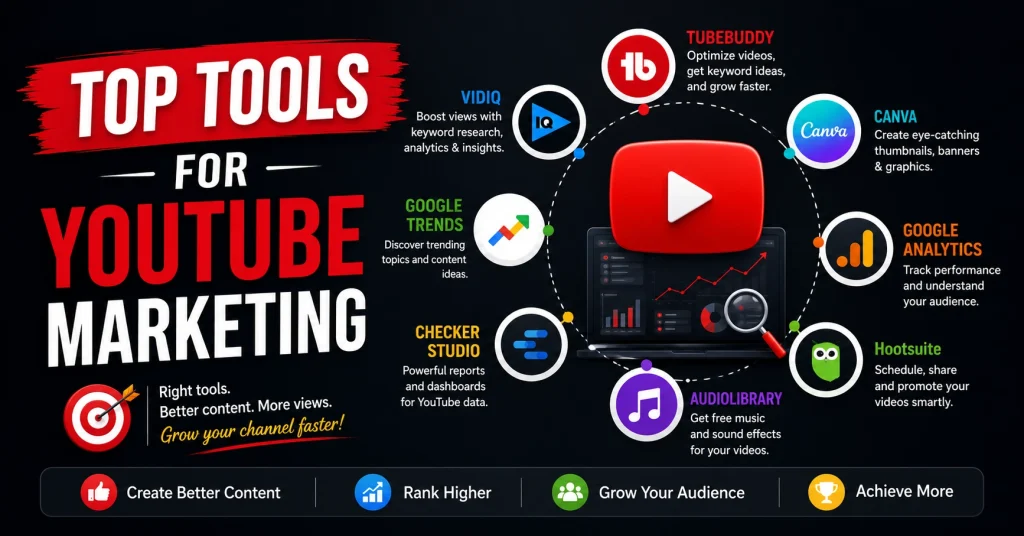
To streamline your YouTube marketing efforts, use these essential tools:
Tool
TubeBuddy/VidIQ
Canva/Adobe Premiere
Google Ads
YouTube Analytics
Social Blade
InVideo/Descript
Hootsuite
Purpose
SEO, Keyboard Research, A/B Testing
Thumbnail &video editing
Paid campaign Management
Performance tracking
Competitor & channel analysis
Quick video creation & editing
Schedulling & cross-posting
YouTube Marketing Mistakes to Avoid
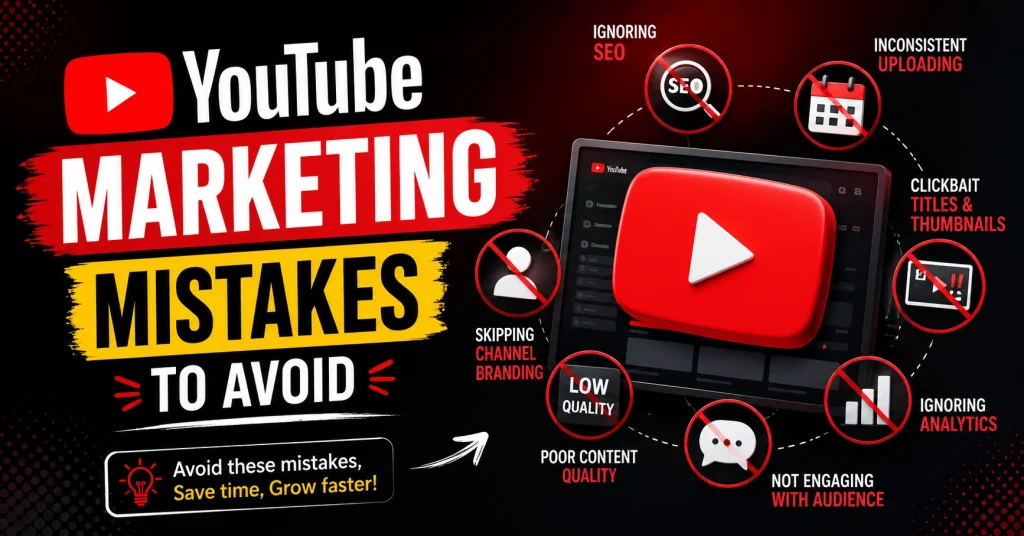
Even experienced marketers make mistakes. Here are common pitfalls to avoid:
- Ignoring SEO – Without proper optimization, your videos won’t rank.
- Overly Promotional Content – People come for value, not just ads.
- Inconsistent Uploads – Sporadic posting hurts channel growth.
- Neglecting Audience Engagement – No replies to comments = lower visibility.
- Copying Competitors Blindly – Find your unique voice.
- Ignoring Analytics – Data-driven decisions lead to better results.
- Not Using Playlists – Missed opportunity to keep viewers watching longer.
Future of YouTube Marketing
YouTube is constantly evolving. Here’s what to expect in the coming years:
- AI & Automation – AI-powered video editing, auto-captioning, and personalized recommendations.
- Short-Form Video Dominance – YouTube Shorts will continue growing in importance
- Interactive Videos – Shoppable videos, polls, and clickable CTAs within videos.
- Virtual & Augmented Reality – More brands will use 360° videos & VR experiences.
- More Monetization Options – Expanded ad formats, memberships, and tipping.
- Live Shopping & E-Commerce Integration – Direct product purchases from live streams.
YouTube marketing is a game-changer for businesses looking to increase brand awareness, drive traffic, and boost sales. By following the strategies in this guide—optimizing your channel, creating engaging content, leveraging SEO, and promoting effectively—you can build a loyal audience and grow your business.
Action Steps to Get Started:
- Set up a YouTube channel and optimize it for branding.
- Research your audience and create a content plan.
- Start producing high-quality videos (educational, entertaining, or promotional).
- Optimize for SEO (titles, descriptions, tags, thumbnails).
- Promote your videos on social media and through ads.
- Engage with your audience and analyze performance.
- Iterate & improve based on data.
Final Thoughts

YouTube is more than just a video platform—it’s a powerful marketing channel that can transform your business. Whether you’re a small business, startup, or established brand, YouTube marketing can help you reach new audiences, build trust, and drive conversions.

zainab khan
